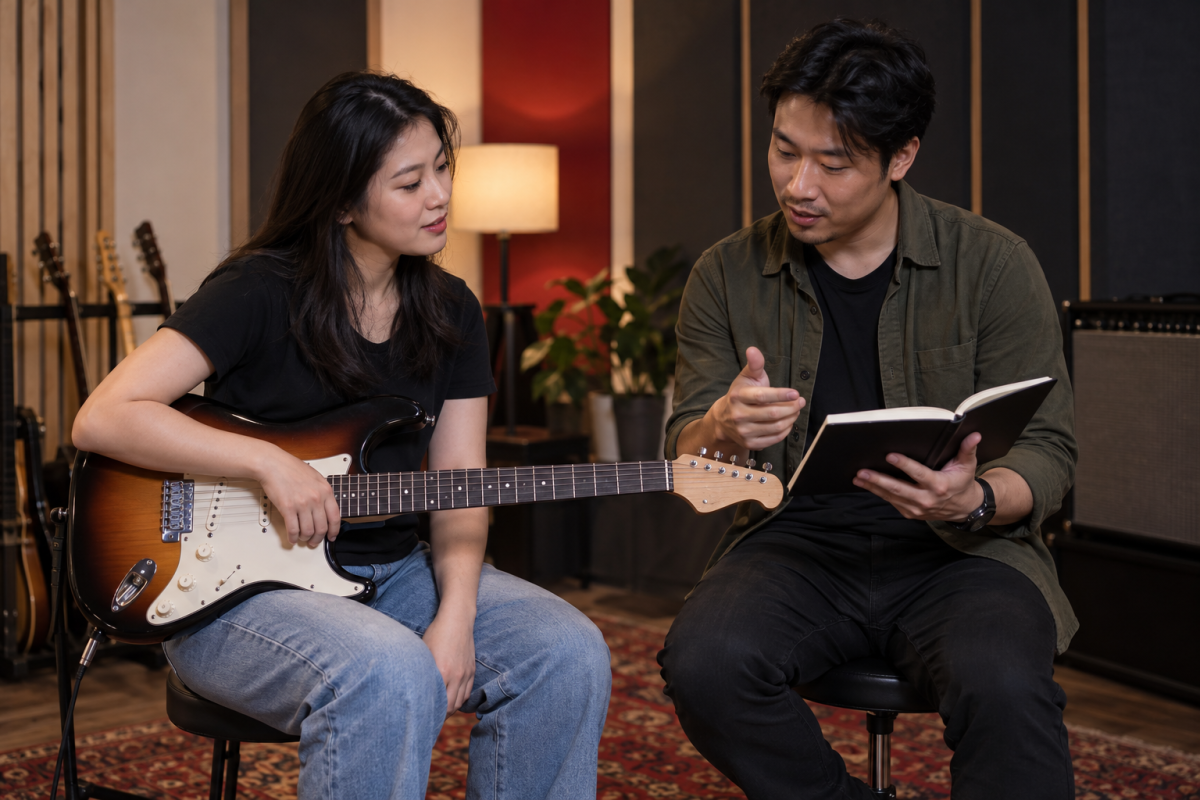
Thinking about starting Piano as an adult? You do not need to have every detail worked out before asking about lessons. A useful starting point is to decide what you would enjoy playing, how practice might fit into your week and what you want to understand before committing.
This checklist is for complete beginners and adults returning after a break. It is preparation for a conversation about learning—not a test you must pass or a promise about how quickly you will progress.
1. Give yourself a musical starting point
“I want to learn Piano” can mean several different things. You might want to read and play a melody, accompany songs with chords, explore different sounds or work towards a structured learning goal.
Choose one example of music you enjoy and write down what interests you about it. Is it the melody, the rhythm, the accompaniment or the feeling of playing the whole piece?
You do not need to know the technical vocabulary. “I would like to play something recognisable for myself” is a useful starting point. Treat that as a direction to discuss, not a deadline for mastering a particular song.
2. Plan for the week you actually have
Before choosing lessons, consider where playing could fit alongside work, family and other commitments. Look for realistic opportunities rather than planning around an unusually quiet week.
Ask yourself:
- Where could I practise without having to rearrange the room every time?
- When would I have access to the instrument?
- Would sound disturb someone else at those times?
- What would make it easier to return to practice after a busy week?
There is no fixed daily practice requirement in this checklist. Discuss an appropriate routine for your goals and starting level rather than treating someone else’s schedule as a rule.
3. Understand your instrument options before buying
A portable keyboard, a digital Piano and an acoustic Piano are not interchangeable in every respect. Size, key feel and sound arrangements are worth considering alongside your available space.
Portable keyboards often have fewer keys and a lighter action. Digital Pianos commonly offer a full 88-key layout with weighted keys; headphone connections can help with quieter practice, depending on the model. Yamaha’s first-keyboard guide explains these general differences.
“Weighted” describes resistance in the keys intended to resemble aspects of an acoustic Piano’s feel. It is different from simply having a Piano sound selected on a keyboard. Read Yamaha’s explanation of weighted keys.
If you already have an instrument, note its make, model and key count before discussing lessons. If you do not, ask what would suit the learning you want to do before making a purchase. These comparisons are not an AOR equipment requirement or a recommendation to buy a particular brand.
4. Be clear about any previous experience
If you learnt years ago, explain what you remember and what feels unfamiliar now. You might recognise notation but feel unsure about playing with both hands, or remember chord shapes without being comfortable reading music.
If you are a complete beginner, simply say so. A useful discussion starts with your present experience, not the level you think you ought to have reached by your age.
5. Decide whether a graded goal interests you
Learning for enjoyment and working towards a graded objective are different ways of organising your goals. Consider whether you want a specific assessment target or would prefer to discuss a direction centred on the music you enjoy.
You do not have to decide your entire learning journey at the outset. Ask how the available options relate to your current experience and aims. For AOR’s current pathway and lesson information, use the Piano lesson page rather than relying on a generic checklist.
Your before-you-enquire checklist
Bring these five points into the conversation:
- One musical goal or example of music you enjoy.
- Your previous experience, including “none”.
- Your current instrument, or a question about choosing one.
- Your realistic lesson and practice availability.
- Any questions about the learning route, current fees or how to begin.
The aim is not to arrive ready to perform. It is to make the next conversation specific enough to help you decide whether the lessons fit your goals.
Explore AOR’s Piano lessons for current lesson information and enquiry options.